
Biosafety, What Is Regulated in the Cartagena Protocol?
[2022, June 5th, Kzelle Joy A.Delas Alas]
Articles
Biosafety is closely related to natural events, such as outbreaks,
epidemics and pandemics. Biosafety can also be related to accidents in the laboratory or work
area, which can be caused by containment failures, engineering failures of the facilities used,
or the behavior of the working personnel.
Biosafety is an effort made to protect humans and
the environment from elements derived from biological materials. Biosafety aims to reduce or
eliminate the exposure of an individual or the environment to hazardous biological agents. This
is achieved by implementing various levels of laboratory and room control (containment) through
laboratory design and access restrictions, capacity building and training, use of containment
equipment and safe methods for handling infectious materials within the laboratory environment.
Biosafety has been regulated in the Cartegena Protocol, and Indonesia is one of the
countries implementing the protocol. The Cartagena Protocol is a continuation of the convention
on biodiversity in Rio De Jainero, Brazil in 1992.
What things are set in the protocol?
In the convention, in Article 8 letter (g), article 17, article 19
paragraph (3) and paragraph (4) mandates further regulation regarding cross-border arrangements,
procurement and utilization of genetically modified organisms as a result of modern
biotechnology. With this mandate came a protocol agreed in Cartagena, Colombia in 2000.
The
Cartagena Protocol is an agreement of the parties to regulate cross-border activities or
stopovers, handling and utilization of living organisms produced by modern biotechnology from
one country to another by a person or institution. The level of biosafety protection is carried
out to avoid negative impacts on the preservation and sustainable use of biodiversity and risks
to human health.
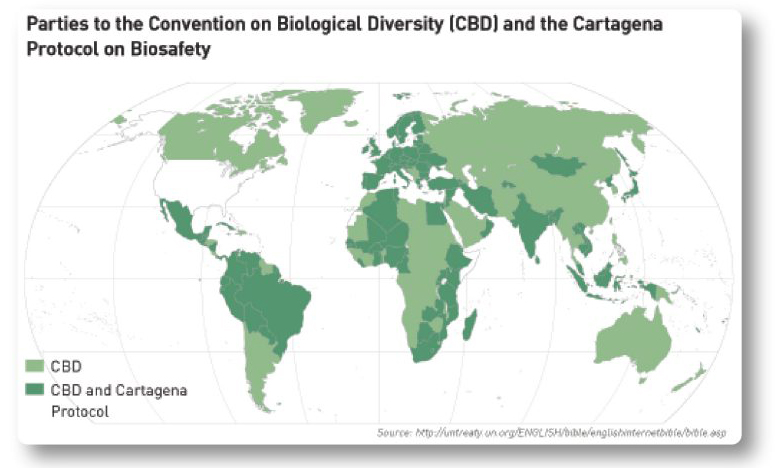
On August 16, 2004 Indonesia has ratified the Cartagena Protocol through Law no. 21 on Biosafety to the Convention on Biological Diversity. This law was then implemented with a precautionary approach.